NaijaBalance Plate™
A culturally relevant nutrition model for healthy living in Africa
NaijaBalance Plate™
A culturally adapted, evidence-informed nutrition model designed to prevent and manage chronic disease with familiar African meals, visuals, and implementation pathways.
An initiative of The Lifestyle Impact Foundation
Conceptualized by Dr. Ijeoma J. Dozie
Grounded in African food realities and preventive health practice.
The NaijaBalance Plate™ is an initiative of The Lifestyle Impact Foundation, developed to address the growing burden of diet-related chronic diseases through culturally relevant, practical nutrition solutions.
The model was conceptualized by Dr. Ijeoma J. Dozie, a Consultant Family Physician and International Board-Certified Lifestyle Medicine Physician, drawing on clinical experience, lifestyle medicine principles, and indigenous food systems.
It is designed to bridge the gap between global dietary recommendations and everyday eating patterns in African communities.
Initiative Overview
Africa is eating itself into chronic disease.
Rising fast
Diabetes
Glycemic disorders are increasing as refined foods and sedentary lifestyles become more common.
Widespread
Hypertension
Salt-heavy, highly processed eating patterns are contributing to long-term cardiovascular risk.
Increasing concern
CKD
Chronic kidney disease needs earlier, food-based prevention and better diet adaptation across disease stages.
Nutrition science, translated into familiar African meals.
NaijaBalance Plate translates evidence-based nutrition guidance into a visual African plate model that is simple enough for households, flexible enough for clinicians, and structured enough for programs, schools, and health systems.
A practical plate structure with supportive daily habits.
1/2 vegetables for fiber, micronutrients, volume, and metabolic support
1/4 protein from culturally familiar, minimally processed sources
1/4 whole and fiber-rich carbohydrates or swallows sized for better balance
Water intake around 2.5-3L using plain or infused water when appropriate
Fruits in moderation and portion awareness
Natural herbs, spices, and fermented foods as supportive flavor and food culture tools
Reduced salt, sugar, seasoning cubes, ultra-processed foods, and deep-fried foods
Lifestyle cues that reinforce sleep, movement, stress management, and social connection
Four editions, one shared philosophy.
The NaijaBalance Plate can be taught simply, expanded for deeper coaching, or adapted to a clinical setting without losing its core structure.
Core Edition
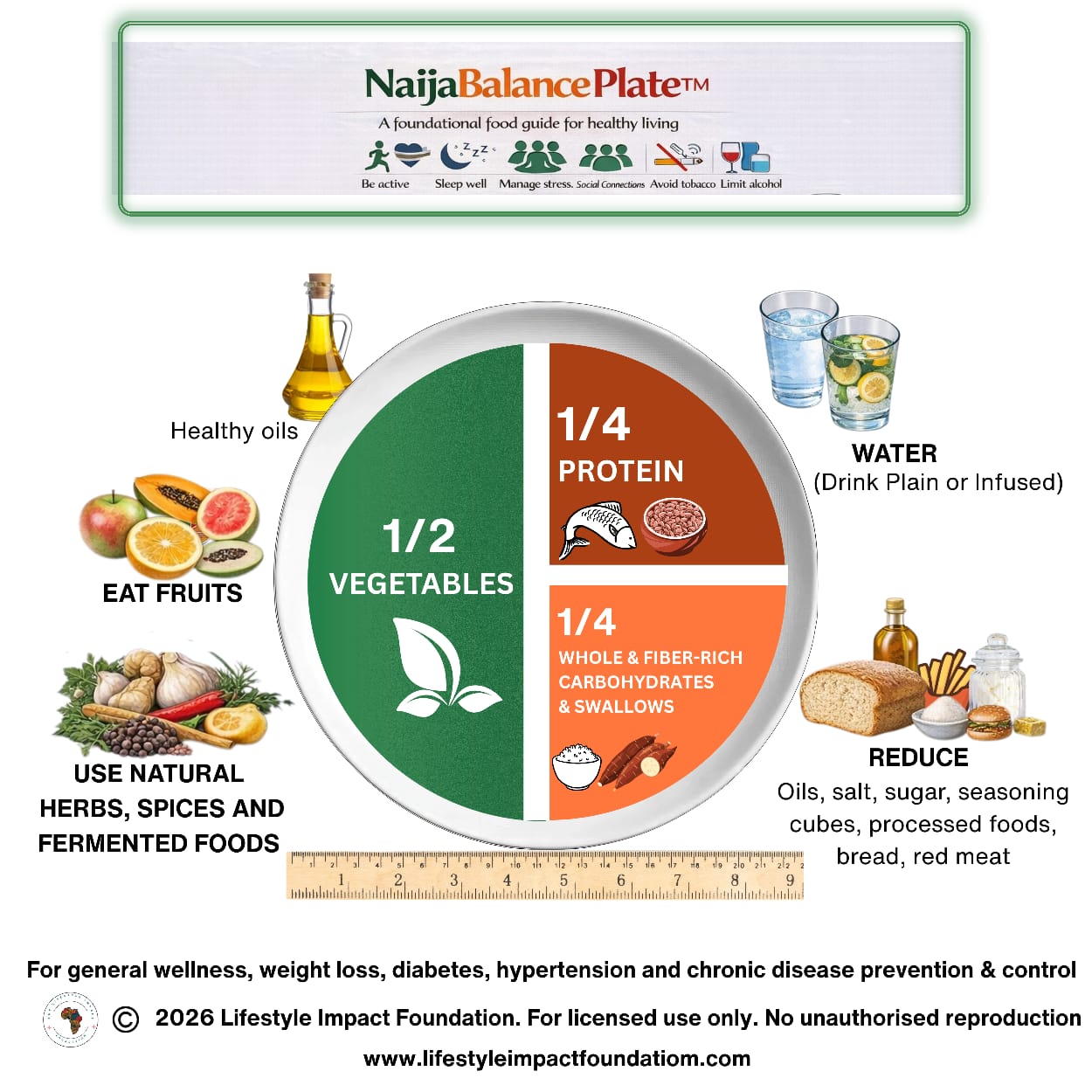
A simplified visual model that makes the core plate proportions instantly understandable.
Best fit
Best for public education, campaigns, community talks, and first exposure.
Centers the 9-inch plate with the clearest explanation of vegetables, protein, and fiber-rich carbohydrates.
Standard Edition
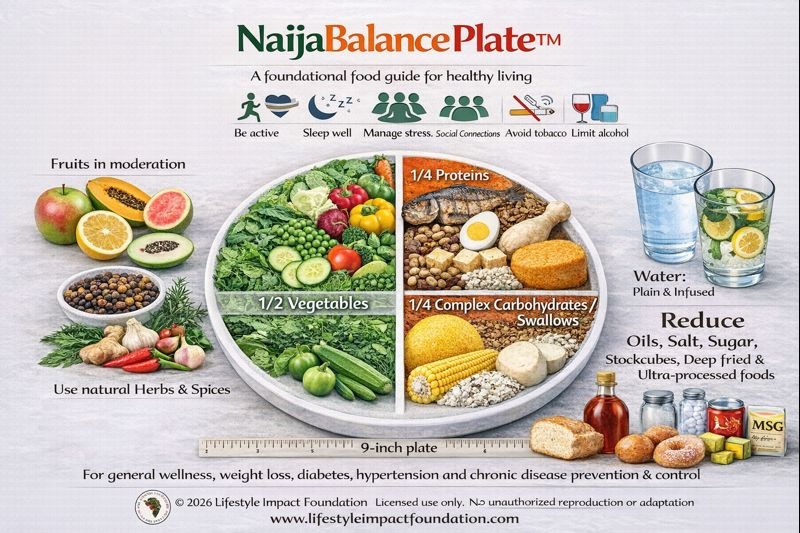
A foundational healthy-living guide that pairs the plate with fruits, water, healthy oils, and foods to reduce.
Best fit
Best for general wellness, households, and lifestyle medicine education.
Introduces practical surrounding food choices and reduction cues beyond the plate itself.
Expanded Edition
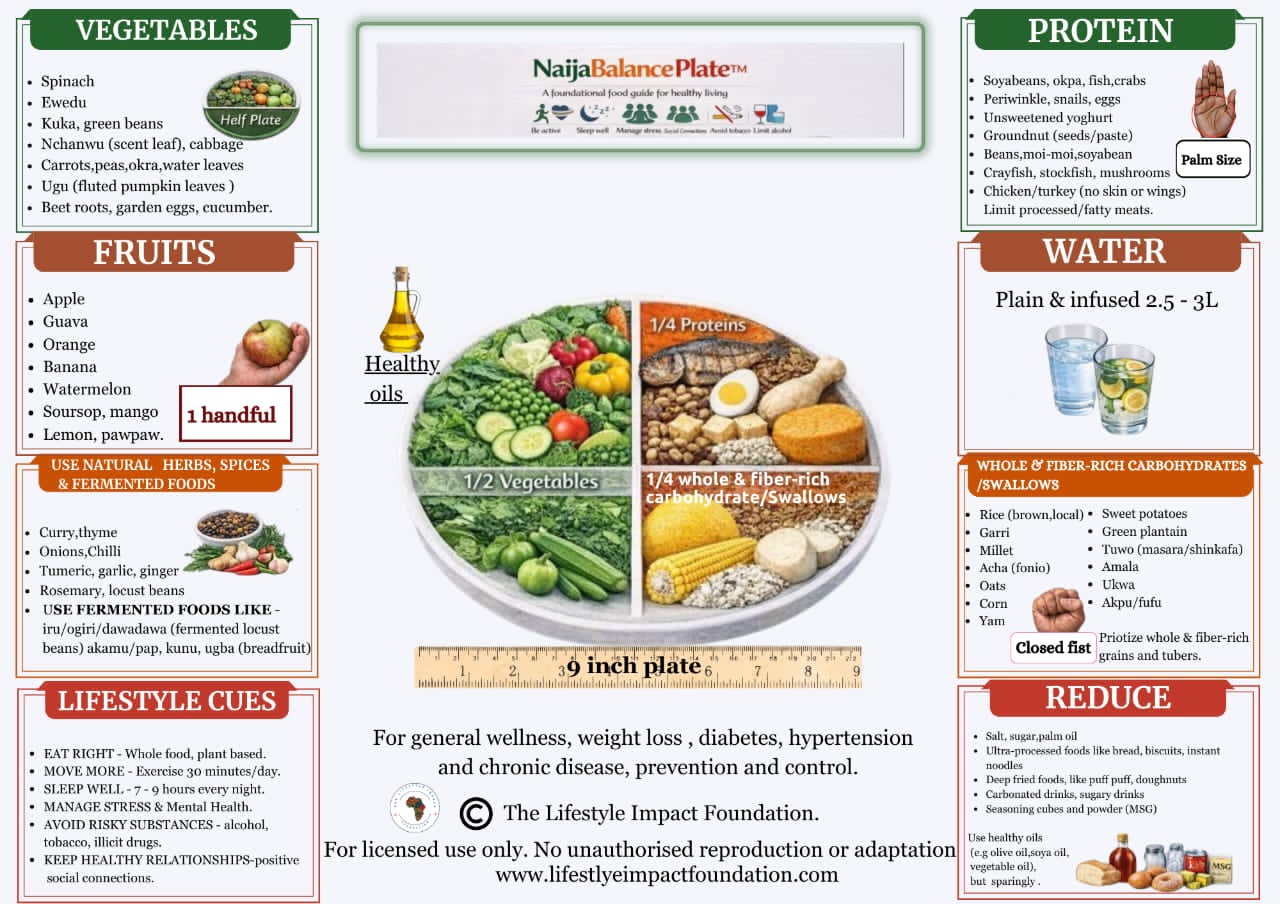
A fuller teaching version that gives examples of vegetables, proteins, carbohydrates, fruits, lifestyle cues, and supportive food habits.
Best fit
Best for training, workshops, clinics, and deeper nutrition instruction.
Adds detailed food lists and lifestyle guidance for easier implementation and coaching.
Kidney-Adapted Edition
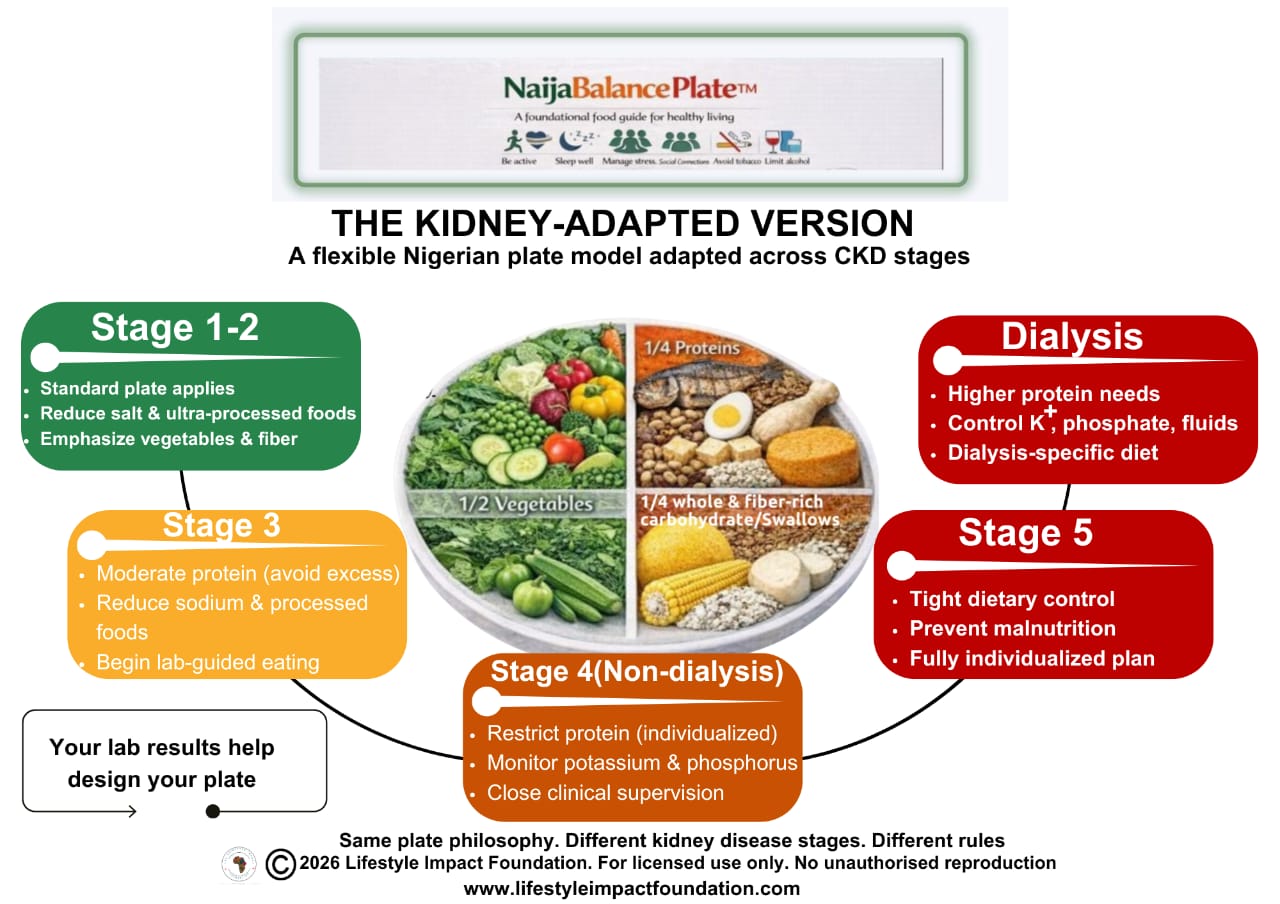
A clinically adapted version that preserves the plate philosophy while adjusting guidance across CKD stages.
Best fit
Best for renal clinics, dietetic counseling, CKD education, and individualized patient care.
Shows how the model evolves from early CKD through dialysis using stage-aware dietary guidance.
Built for relevance, adaptation, and scale.
Culturally tailored for African food systems and eating realities
Evidence-informed and aligned with preventive nutrition principles
Clinically adaptable across wellness, diabetes, hypertension, and kidney care contexts
Scalable for community programs, schools, clinics, hospitals, and policy conversations
A pathway from local understanding to institutional adoption.
The model is designed to move from household understanding to institutional adoption, making it suitable for both community behavior change and formal care pathways.
01
Community
Use the plate in grassroots education, outreach sessions, faith-based programs, and public campaigns.
02
Clinics
Support counseling, prevention visits, and non-communicable disease follow-up with a practical visual tool.
03
Hospitals
Embed it into nutrition protocols, patient education materials, and multidisciplinary care pathways.
04
Schools & Digital Training
Translate the model into school feeding systems, digital education, and healthcare worker training resources.
05
Policy & Scale
Use implementation evidence to inform guidelines, institutional partnerships, and broader scale-up efforts.
Outcomes the model is designed to support.
Impact goal
Improved glycemic control
Supports portion balance, fiber intake, and better everyday meal decisions.
Impact goal
Reduced blood pressure risk
Encourages lower-salt patterns and more vegetable-forward meals.
Impact goal
Better weight management
Creates a simple structure for healthier volume, satiety, and routine choices.
Impact goal
CKD progression support
Provides a platform for stage-adapted renal nutrition education.
Join us in transforming how Africa eats and lives.
Whether you want to fund a pilot, implement the model in a clinical setting, or help scale a culturally grounded nutrition framework, this concept is ready for partnership.